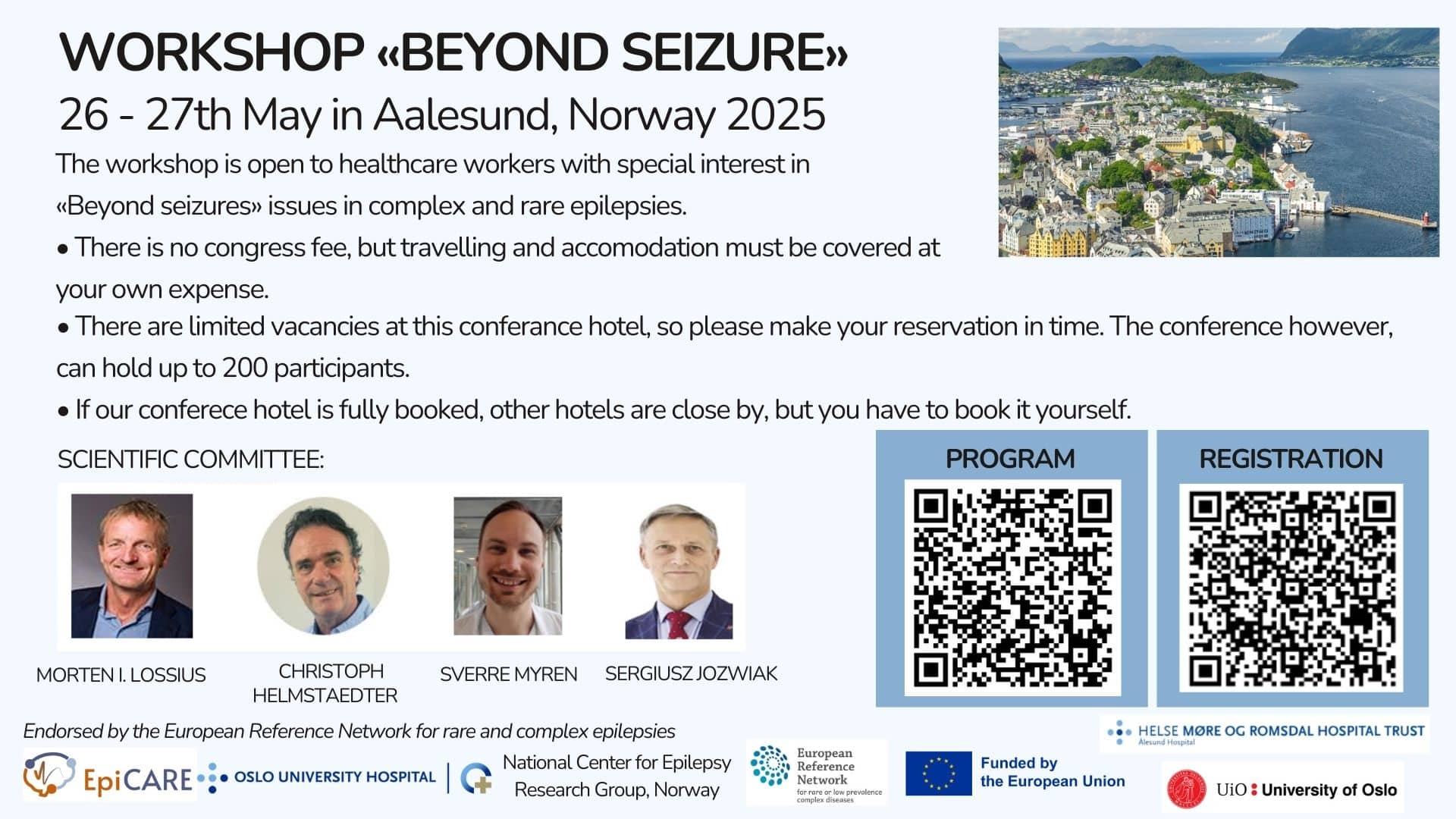
Psychosocial issues, quality of life, sleep disorders, patient perspectives (PROMS), sexuality, ASM adherence and many others, are essential to a comprehensive care of the epilepsies, independently of age and seizure severity.
Focus on issues related to global epilepsy care. Such as:
The WG is structured in two subgroups. One focusing more on adult patients and another on children, particularly those presenting with comorbidities related to a Developmental and Epilepcti Encephalopathirs (DEEs). The subgroups regularly interact to develop a common strategy and shared actions.
A Special Interest Group (SIG) on Transition was created, lead by V. De Giorgis (Italy) and M. Malenica (Croatia). A survey was launched, aiming to have a “photo” of the practices in EpiCARE centres and on how our members deal with transition from childhood to adolescence and adulthood of patients with: Epileptic & Developmental Encephalopathies; Drug-resistant Juvenile Myoclonic Epilepsy or focal idiopathic/LKS/CSWSS; Drug-resistant Focal Structural Epilepsies that could not benefit from surgery (following pre-surgical evaluation) or already operated on without a full control of seizures or persisting comorbidities.
June 2025. Salzburg (Austria). Sergiusz Jóźwiak. Which are for you the main priorities for a better care of children with epilepsy, other than a better control of seizures?
If you are interested to voluntarily contribute to this WG activities, please use the contact form to let us know.